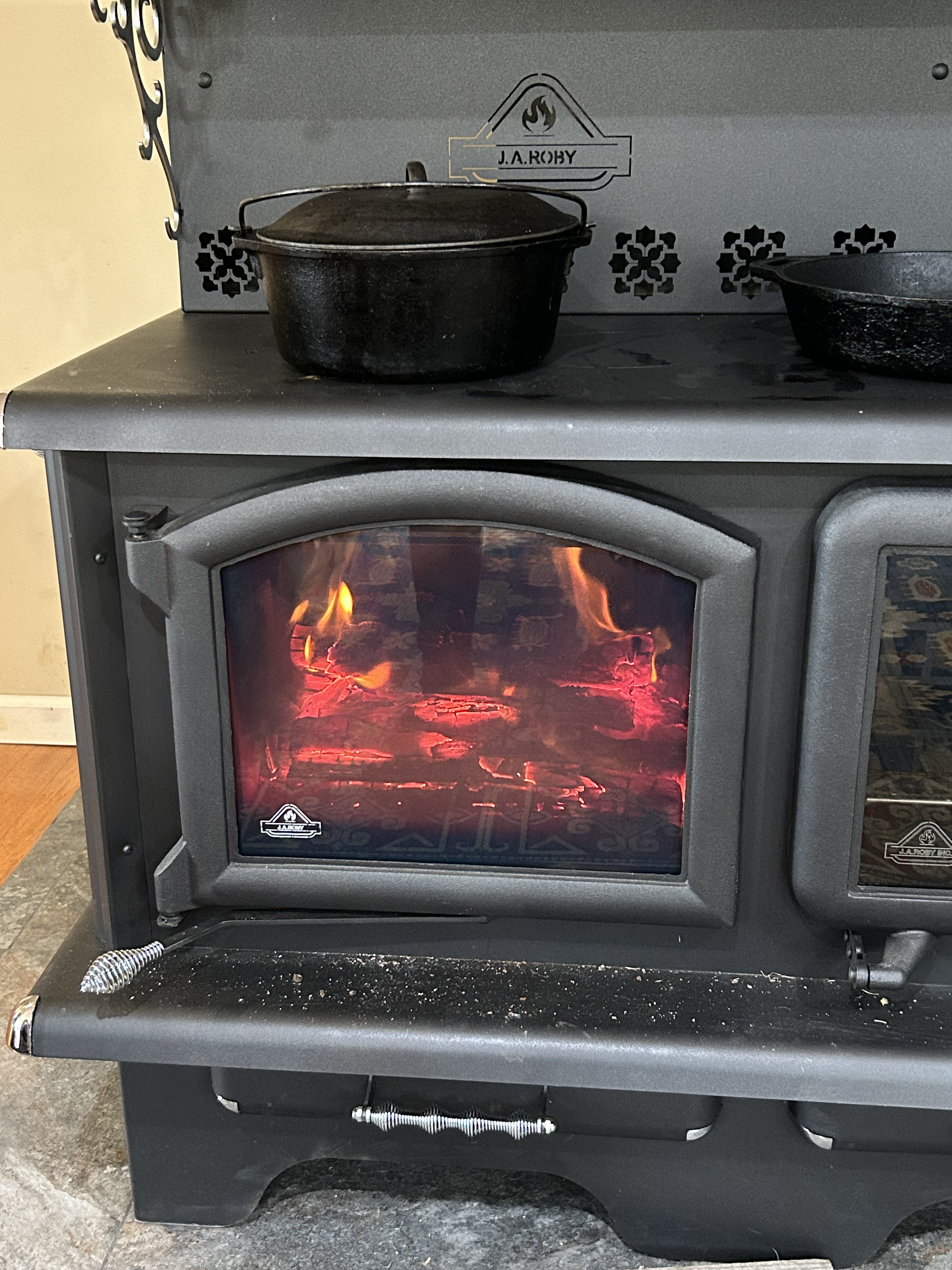
On a wood cook stove!
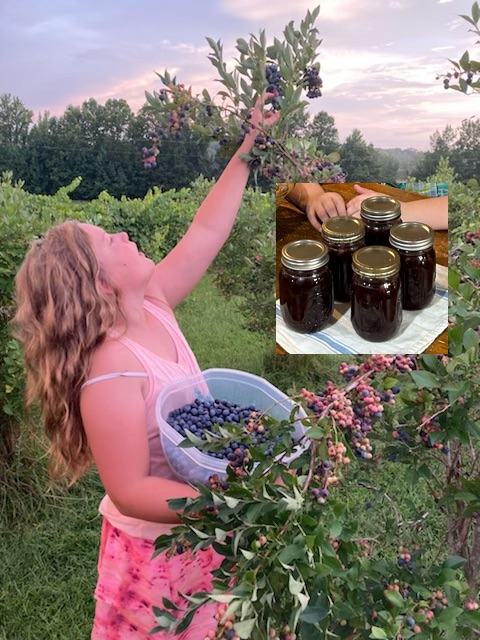
Blueberries work just as well–Two recipes in one!
Use hulls and all! So much flavor and no waste!
Jam making is one of those homesteading skills that everyone should know how to do. It is so rewarding. I wanted to share this recipe with you. It is super easy.
If you’re having trouble getting your jam to set properly, this is the recipe for you!
I grew up with jam on hot buttered biscuits. My grandmother loved blackberry season. We would take our baskets and forage the wild blackberry thickets around the farm every summer. She loved to make blackberry cobblers and jam.
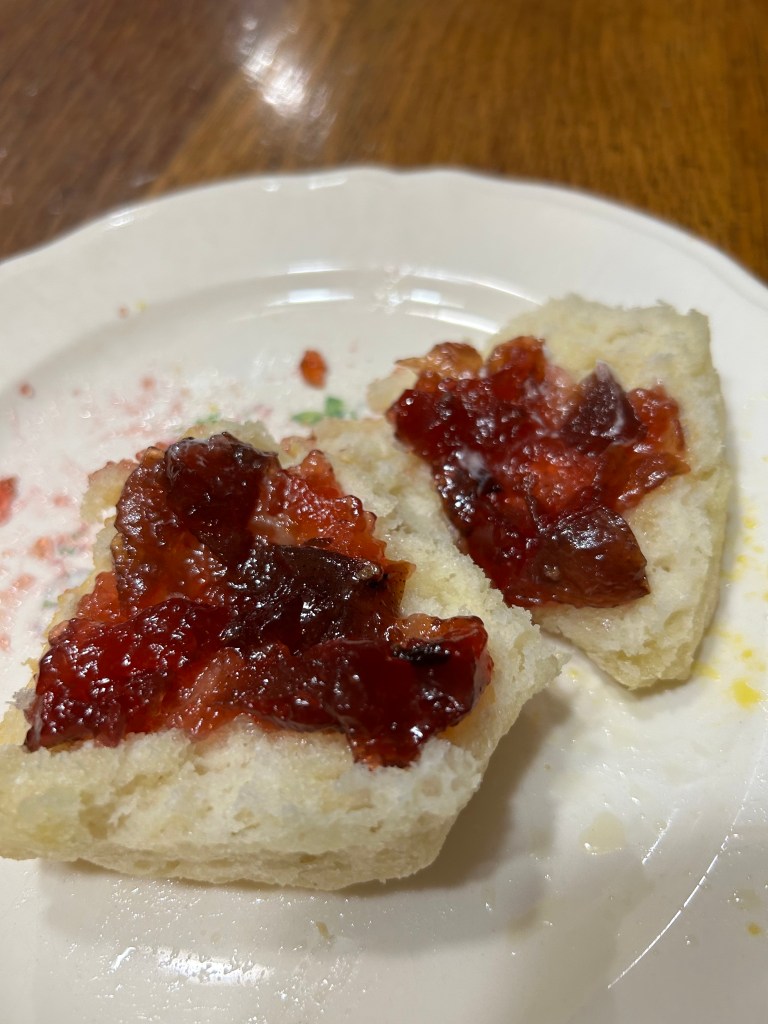
Jam was the only thing my grandmother was NOT good at. The cobbler pies were delicious, but she always cooked the jam until the blackberries were like little jawbreakers. And the jam was so stiff you could hardly pry it from the jar.
This was not a one time mistake. So looking back, I guess she liked it that way!
When I started to try my hand at jelly and jam, I had the opposite problem. My jam would never set properly. It was more like blackberry syrup. So disappointing!
About 10 years ago, we planted two rows of blueberry bushes and two rows of muscadines–about 40 plants in all. I was determined to make a proper jam. With 4 long rows of fruit, I had no choice. I had to learn to make good jam!
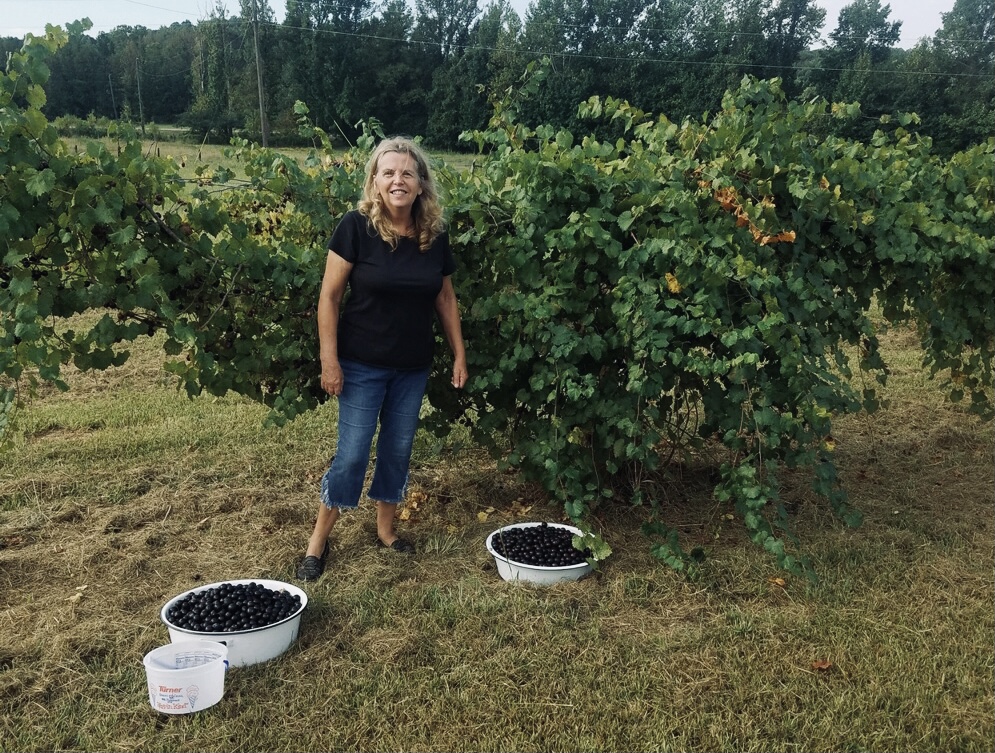
I have had a lot of people ask me about where to find these enamel dish pans, so I am going to provide a link. As an Amazon Associate, I earn from qualifying purchases. This means, if you click on a link on my blog and make a purchase, I will receive a small commission at no extra cost to you. THANK YOU for helping me start a college fund for Bella! ENAMEL DISH PAN


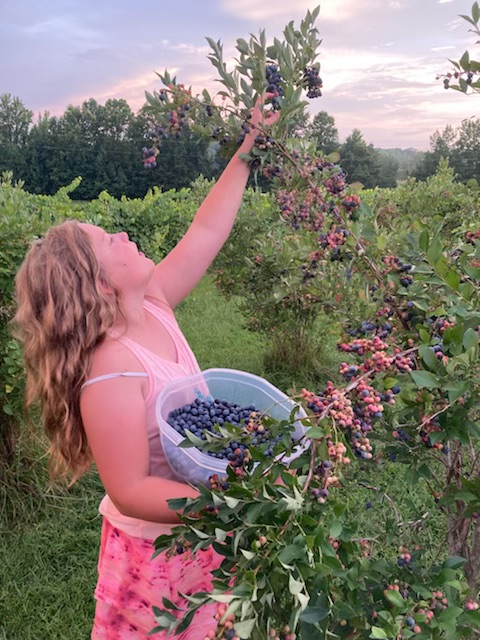
Bella loves to pick the blueberries. And she loves to eat them right off the bush. Until she started selling them at a local farmers’ market last year, more blueberries went into her mouth than went in her pail! But that’s fine! Kids are only kids once in life.
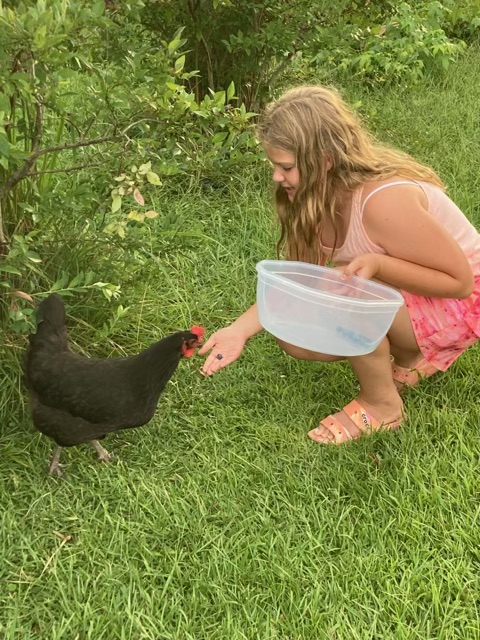
The hens are beggars! They will eat the blueberries right out of your hand… and any that fall on the ground. They have started holding the limbs down for each other, and they take turns eating right off the bush! But that’s OK. We have plenty for everyone!
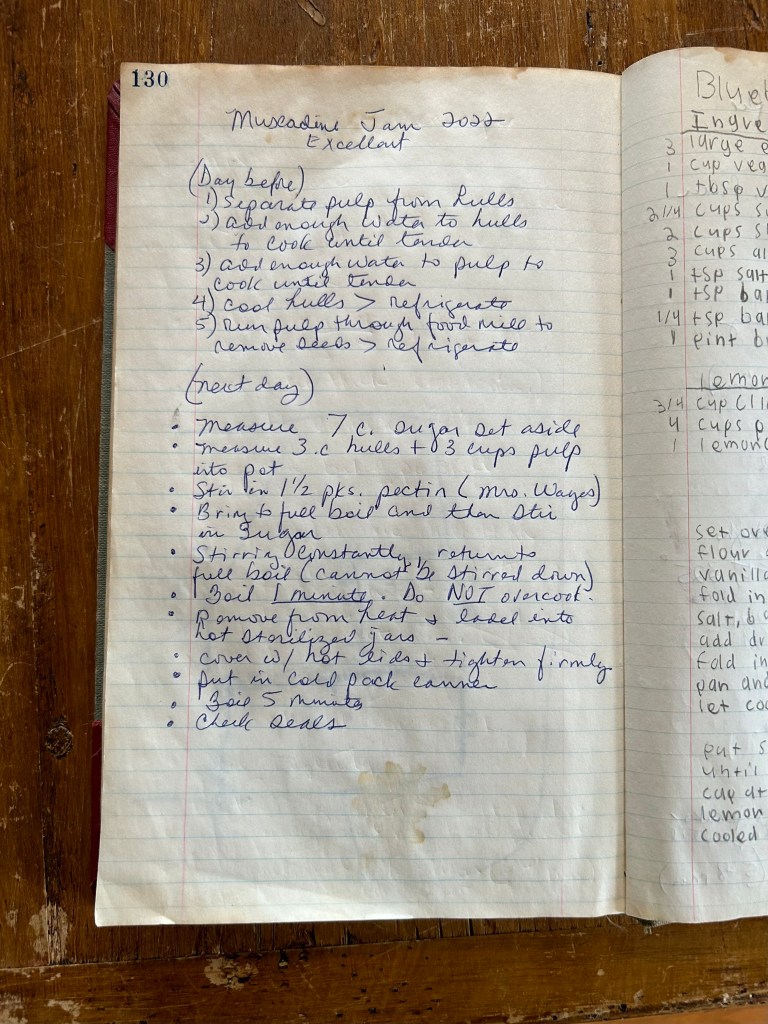
Last year, I ran across this recipe for jam. It was the first time EVER that my jam set properly! I had almost given up. As a matter of fact, I was so excited that the recipe earned one of the last pages in a recipe book that I have been keeping for over 50 years!
Jam making is one of those things where you have to follow the recipe EXACTLY! And it is never a good idea to double your recipe. If you have too much fruit for one batch. Make two…or three separate batches.
Last fall when I was making the last of the jam from our muscadine vines, I ran out of time and froze the last 3 batches in ziplock bags. We use so much that we are running out here in January, so Bella and I decided to cook up a batch!
This jam tutorial starts with frozen muscadine fruit that was processed in late September. I freeze the blueberries whole, right off the bush, but the muscadines have to have a little more preparation. I will share the steps before freezing and do an update video (from start to finish) next fall when when jam season begins again.
I always do these steps the day before I cook the jam. You can either put the processed fruit in the refrigerator until the next day, go ahead and cook your jam, or freeze the fruit for later.
The following recipe can be used for blueberries also.
Muscadine Jam
9 T. Pectin (I use Mrs. Wages—9T. = 1 1/2 packs.)
7 C. Sugar
3 C. Hulls
3 C. Pulp
PREPARING THE FRUIT
STEP 1: Wash fruit.
STEP 2: Separate pulp from hulls. I usually pop them one at a time. It is addictive…kind of like popping bubble wrap.
STEP 3: Put hulls in a large pot and add enough water to cover–cook until tender.
STEP 4: Put pulp in a separate pot and add enough water to cove–cook until tender. (at the same time your are cooking your hulls)
STEP 5: Cool hulls and pulp.
STEP 6: Run pulp through a food mill to remove seeds.
STEP 7: Refrigerate or freeze for later. If you are freezing, you will need to mix hulls and pulp and freeze in batches that are ready to cook. For every 3 cups of hulls, you need 3 cups of pulp.
COOKING THE JAM
STEP 1: Measure 7 C. sugar and set aside.
STEP 2: Measure 3 C. hulls and 3 C. pulp into large pot.
STEP 3: Stir 9 T. of pectin (I use Mrs. Wages) into fruit. (1 and 1/2 packs=9 T.)
STEP 4: Bring to a full boil and then stir in sugar.
STEP 5: Stirring constantly, return to a full boil–(a boil that cannot be stirred down.)
STEP 6: Boil for 1 minute. Do NOT overcook. Cooking more than 1 minute can cause your jam to not set.
STEP 7: Remove from heat and ladle into hot, sterilized jars.
STEP 8: Cover with hot lids and tighten firmly.
STEP 9: Put in cold pack canner and boil 5 minutes. Water should come 1 inch above top of jars.
STEP 10: Do not disturb your jars until the next day. Check to make sure they are sealed and remove to your pantry. If a jar has not sealed properly, refrigerate and use first.
STERILIZE JARS (before you begin)
Place clean jars in a cold pack canner and cover with 1 inch of water. Boil for 10 minutes. Leave jars in hot water until you are ready to use them and remove with a jar lifter. It takes quite a while to bring this much water to a boil, so make sure your jars are ready BEFORE you cook your jam. Always cover the pot. The water will boil much more quickly.

Muscadine Jam (preparing the fruit)–yield 5 pints
- STEP 1: Wash fruit.
- STEP 2: Separate pulp from hulls. I usually pop them one at a time. It is addictive…kind of like popping bubble wrap.
- STEP 3: Put hulls in a large pot and add enough water to cover–cook until tender.
- STEP 4: Put pulp in a separate pot and add enough water to cove–cook until tender. (at the same time your are cooking your hulls)
- STEP 5: Cool hulls and pulp.
- STEP 6: Run pulp through a food mill to remove seeds.
- STEP 7: Refrigerate or freeze for later. If you are freezing, you will need to mix hulls and pulp and freeze in batches that are ready to cook. For every 3 cups of hulls, you need 3 cups of pulp.
Blueberry Jam
Crush blueberries slightly and barely cover with water. Bring to a boil and cook 3-5 minutes. Measure out 6 C. of cooked fruit and juice into a large pot. Stir in 9 T. pectin and 2 T. lemon juice and return to a boil. When boiling, add 7 C. sugar and return to a boil that cannot be stirred down. Boil 1 MINUTE. Do NOT overcook. Follow directions for Muscadine Jam.
Muscadine Jam (cooking the jam)
Ingredients:
- 9 T. pectin (I use Mrs. Wages–9 T. = 1 1/2 pack).
- 7 C. sugar
- 3 C. hulls
- 3 C. pulp

- STEP 1: Measure 7 C. sugar and set aside.
- STEP 2: Measure 3 C. hulls and 3 C. pulp into large pot.
- STEP 3: Stir 9 T. of pectin (I use Mrs. Wages) into fruit. (1 and 1/2 packs=9 T.)

- STEP 4: Bring to a full boil and then stir in sugar.
- STEP 5: Stirring constantly, return to a full boil–(a boil that cannot be stirred down.)
- STEP 6: Boil for 1 minute. Do NOT overcook. Cooking more than 1 minute can cause your jam to not set.
- STEP 7: Remove from heat and ladle into hot, sterilized jars.
- STEP 8: Cover with hot lids and tighten firmly.

- STEP 9: Put in cold pack canner and boil 5 minutes. Boiling water should come 1 inch above top of jars.
- STEP 10: Do not disturb your jars until the next day. Check to make sure they are sealed and remove to your pantry. If a jar has not sealed properly, refrigerate and use first.
Sterilize Jars (before you begin)
Place clean jars in a cold pack canner and cover with 1 inch of water. Boil for 10 minutes. Leave jars in hot water until you are ready to use them and remove with a jar lifter. It takes quite a while to bring this much water to a boil, so make sure your jars are ready BEFORE you cook your jam. Always cover the pot. The water will boil much more quickly.

What is a cold-pack canner? How is it different from a pressure canner?
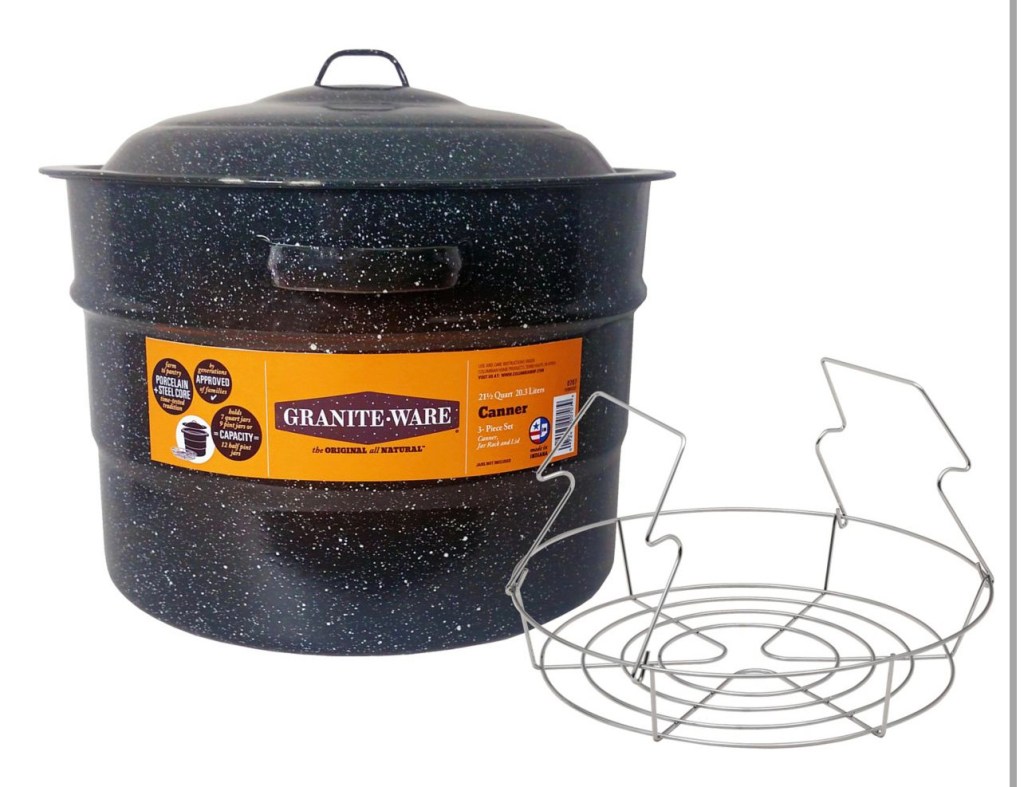
A cold pack canner is the same as a water bath. Unlike a pressure canner, jars are processed in a boiling water bath with no buildup of pressure. It is safe for things like: fruits, fruit juices, tomatoes, pickles, jams and jellies, salsa, and vinegars. Although many people will tell you it can be done, It is not safe to can vegetables or meats in a water bath canner.
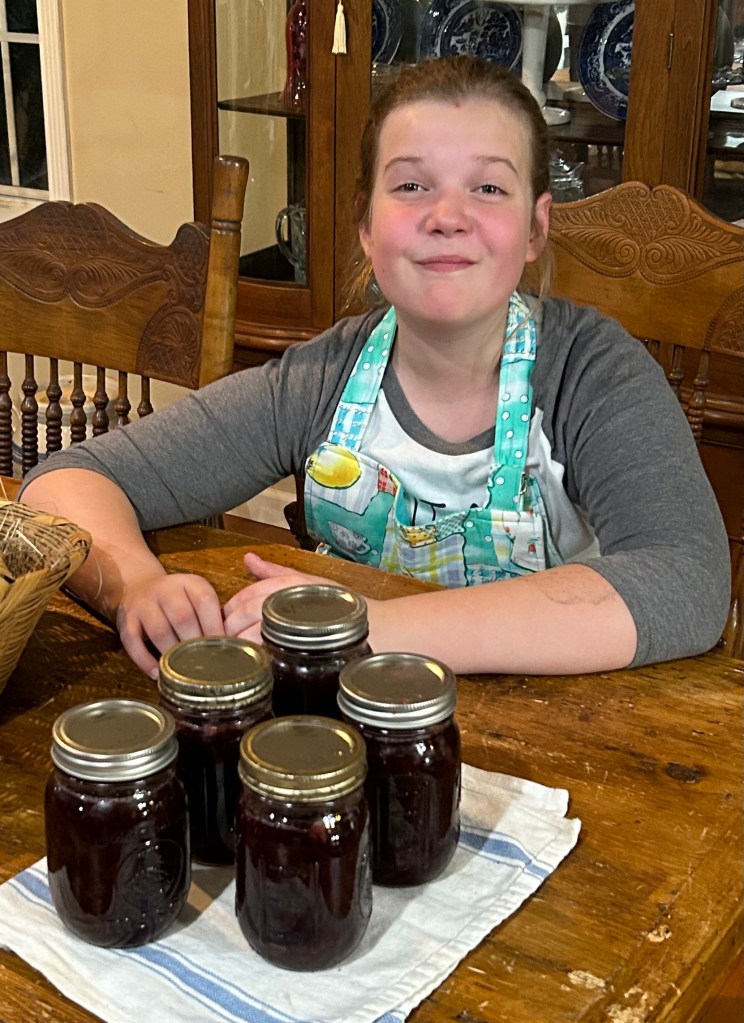
Here are links to all of the kitchen tools and appliances we use in making jam. As an Amazon Associate, I earn from qualifying purchases. This means, if you click on a link on my blog and make a purchase, I will receive a small commission at no extra cost to you. THANK YOU for helping me start a college fund for Bella!
FOOD MILL (also used for tomato sauce, applesauce, puree, baby food, jams and jellies) –this is the one we use.
COLDPACK CANNER also called a Water Bath Canner (12 quart, 21 1/2 quart, 33 quart Granite Ware enamel on steel with lid and jar rack)–make sure you get one with the jar rack. You CANNOT just set the jars on the bottom of a stockpot. They will crack.
JAR LIFTER (used to lift the hot jars out of the canner–highly recommended!)
MASON JARS (9 count) pint and a half wide mouth jar, ring, and lids
CANNING JELLY JARS (8 OZ.) 15 pack–with lids and rings
FRUIT PECTIN (SURE JELL)


Weekly Timeless Treasure
This week’s timeless treasure is my grandmother’s wooden churn lid. It is a treasure to only me, but you will probably appreciate the story behind it.

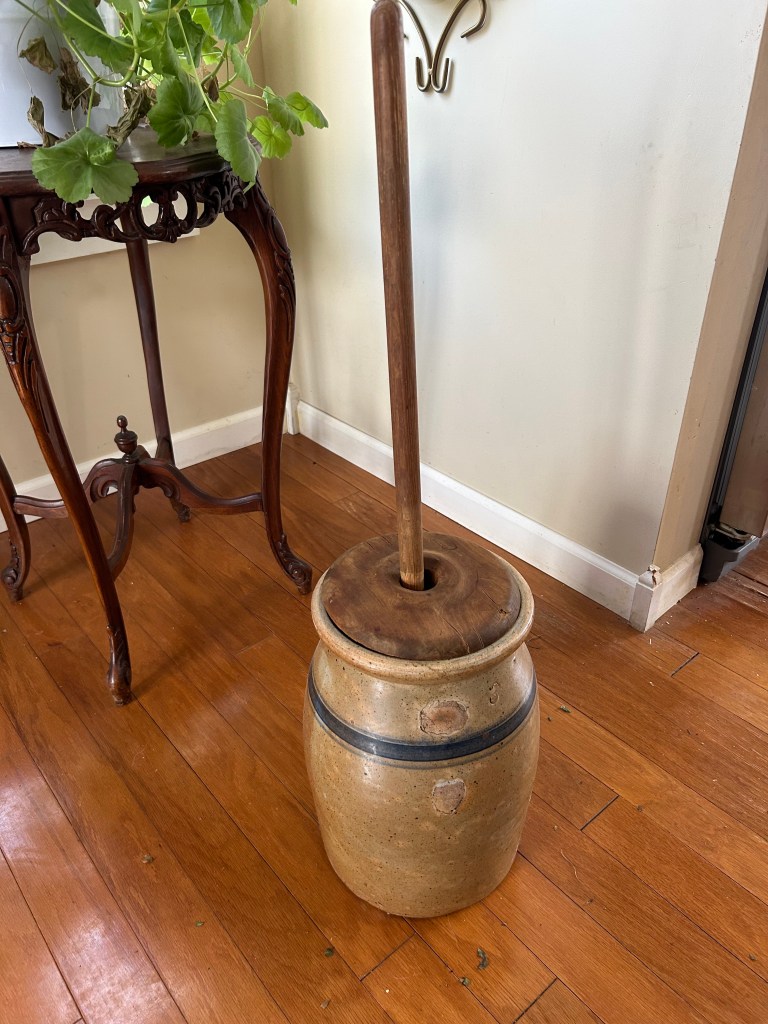
My grandmother was born in 1902 and lived through the Great Depression of the 1930s. She never had much, but I never saw her frown. She was always laughing , and there was always a beautiful smile on her toothless old face.
She told me this story: When she was a girl, her mother made her churn butter as one of her chores. They only had a wooden churn lid. Nanny said if she ever grew up and got married, the first thing she was going to get for herself was a nice, stoneware churn lid.
Well, Nanny never got her new churn lid. She churned with her mama’s old wooden lid her entire life–well up into the 1970s.
When I was a child, Nanny would spread old newspapers on the worn linoleum floor in the farmhouse kitchen. She would churn and sing this song: Long white robes keep dragging along, churn em down, churn em down.
I would always beg to churn. And she was so patient with me. I know she had so much work to do, looking back on it now. She worked a huge garden, put up enough vegetables for the winter, cooked a big noon meal for men working the fields, fed the cows, milked, churned, and even washed clothes outside in an old black washpot every week. But she always let me “help.”
We would watch the wooden dasher handle, and when she saw the yellow flecks of butter start to form, it was time for me to take my “turn.” When the butter was done, she would separate it from the milk and work it into a mound with a little wooden paddle. She didn’t use a butter-mould. Little droplets of milk would form on the outside of the butter and she would dab them off. When she was satisfied that the butter was ready, she would take a butter knife and make little bee hive indentions all around the mound to decorate it.
The churn in the photograph is her churn, and the lid is her wooden churn lid. I would not sell them for the world. They are both priceless Timeless Treasures to me.
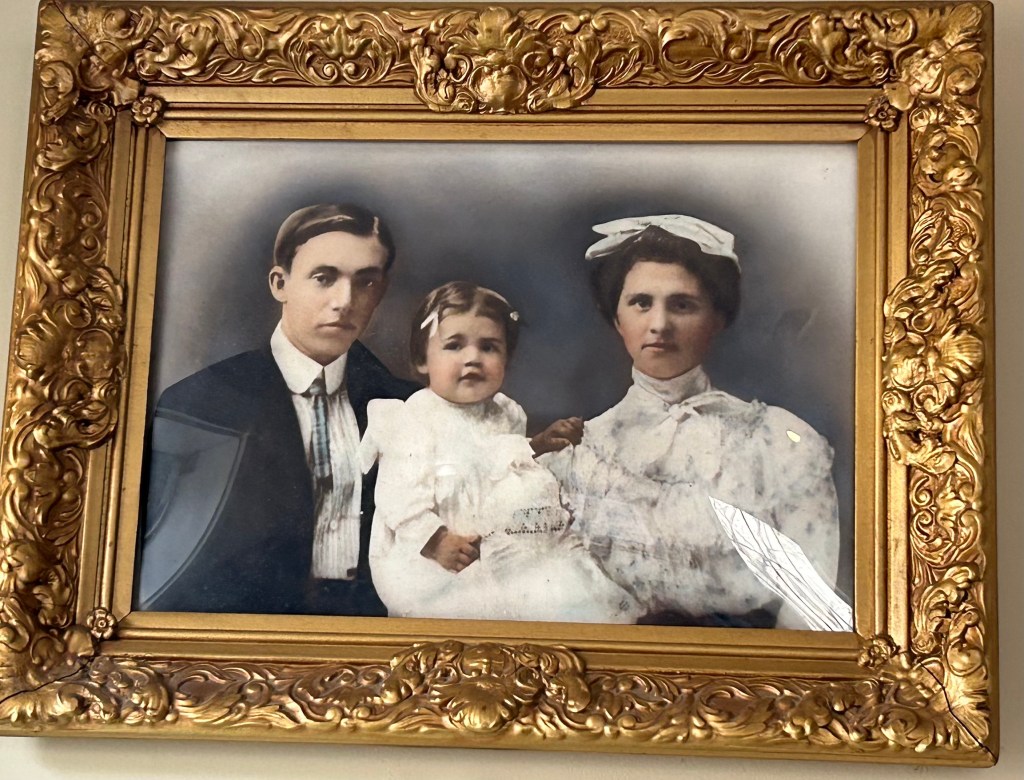
This is a photograph made in 1904 of my grandmother with her mother and father, Ed and Minnie Vanlandingham–Calhoun County, Mississippi. She was the oldest of 5 children.

This is Nanny the way I will always remember her. If it had not been for memories made in her old farmhouse kitchen, Bella and I would probably not be cooking today. The time you spend with your kids and grandkids are the true Timeless Treasures!
Visit us again at Cozy Kitchen Wood Stove for recipes and other tips for vintage cooking, gardening, and just good ole country living!
And don’t forget to scroll to the bottom of the page and SUBSCRIBE to our BLOG! We try to post recipes and tips weekly!
 Cozy Kitchen Wood Stove
3 responses to “Bella Makes Muscadine Jam”
I might try this out
LikeLike
Let us know if you do! It is the best I have ever tasted! Be sure to follow every step exactly. It is not hard, but every step is important.
LikeLiked by 1 person
[…] Here is a link to the post that gives the recipe and method for the MUSCADINE JAM. […]
LikeLike